An Enhanced Workflow for Effortless and Secure Company Onboarding

Kartik Iyer

Basit Saeed

Sergii Melnykov

Pratik Singh
UX Research
Product Strategy
Product Design
Prototyping
Product Execution
As Spotwork prepared to scale operations across the U.S., our onboarding process revealed critical gaps: collaborators frequently ended up creating duplicate company accounts due to a shared registration flow, competitors could freely sign up and scrape data, and legitimate users often failed to complete sign-up due to corporate email firewalls. These issues not only hurt user trust and operational efficiency but also threatened our ability to scale securely and sustainably. These gaps signaled the need for a more secure, guided, and role-aware onboarding experience.
I interviewed sales and community management team members to understand the problems previously enountered during onboarding, and shadowed the sales team through multiple onboarding sessions for a first-hand account of the pain points experienced.
Unrestricted access and a registration form shared among new sign-ups and invited collaborators made onboarding insecure and tedious respectively.
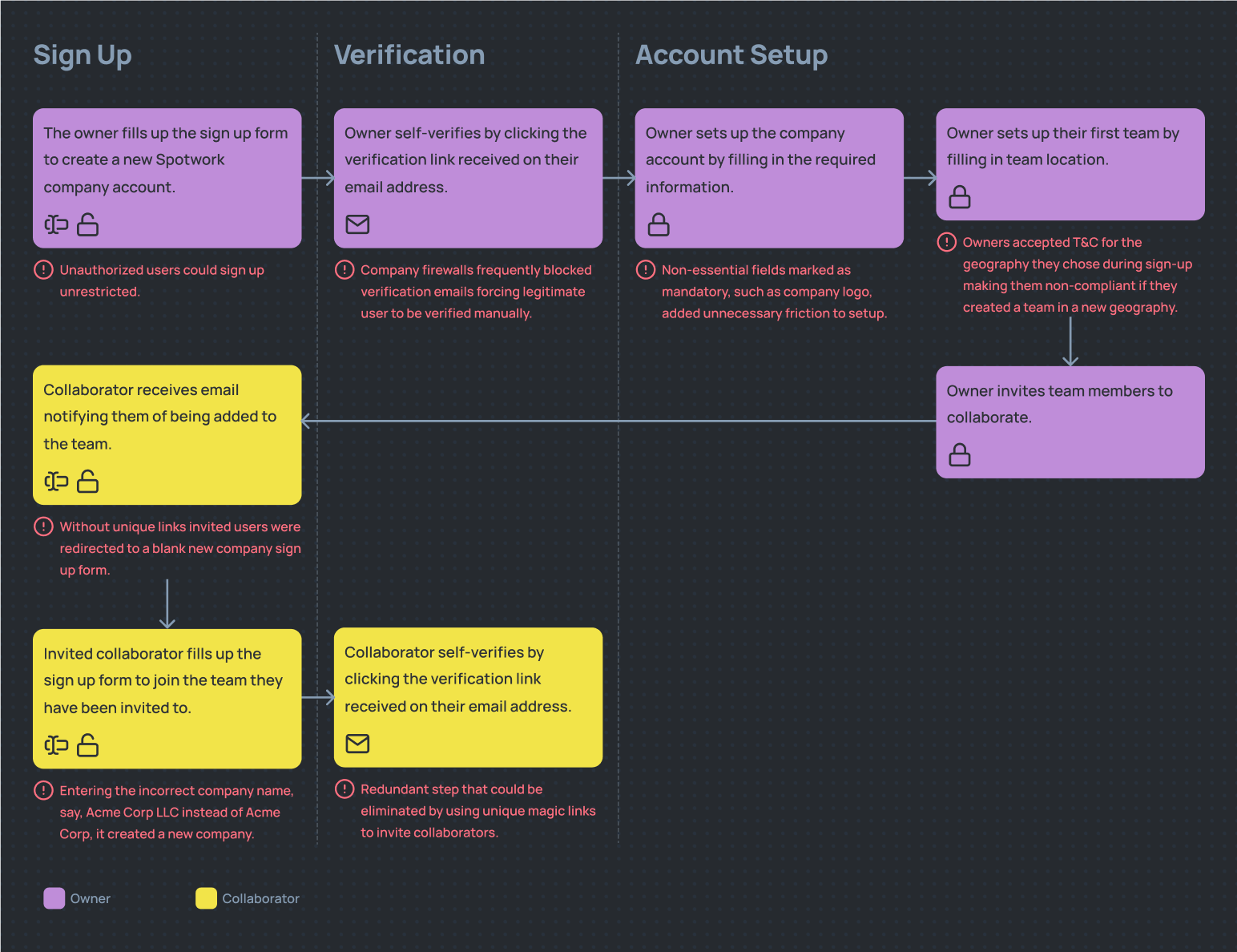
A common sign-up form for both owners and collaborators was at the root of most problems encountered during onboarding, leading to unwarranted friction and making it more insecure.
1
Lack of Unique Sign-Up Links
New sign-ups used a common registration form, causing confusion between company owners and team members. Members often unintentionally created duplicate company accounts due to uncertainty about the name used during account setup.
2
Unrestricted Sign-Ups
Competitors and unauthorized users could sign up to the Spotwork platform and scrape supply-side information undetected.
3
Email Verification Issues
Many companies used firewalls that blocked emails from unrecognized domains, leading to verification emails being undelivered or marked as spam, preventing legitimate users from signing up successfully.
The root causes of the problems we were encountering were two-pronged. We needed to eliminate ambiguity to make the process smoother for the end users. And we had to make the platform more secure to prevent unauthorized users from accessing sensitive data.
Ensure security, clarity, and efficiency through pre-verified access, tailored journeys, and frictionless verification.
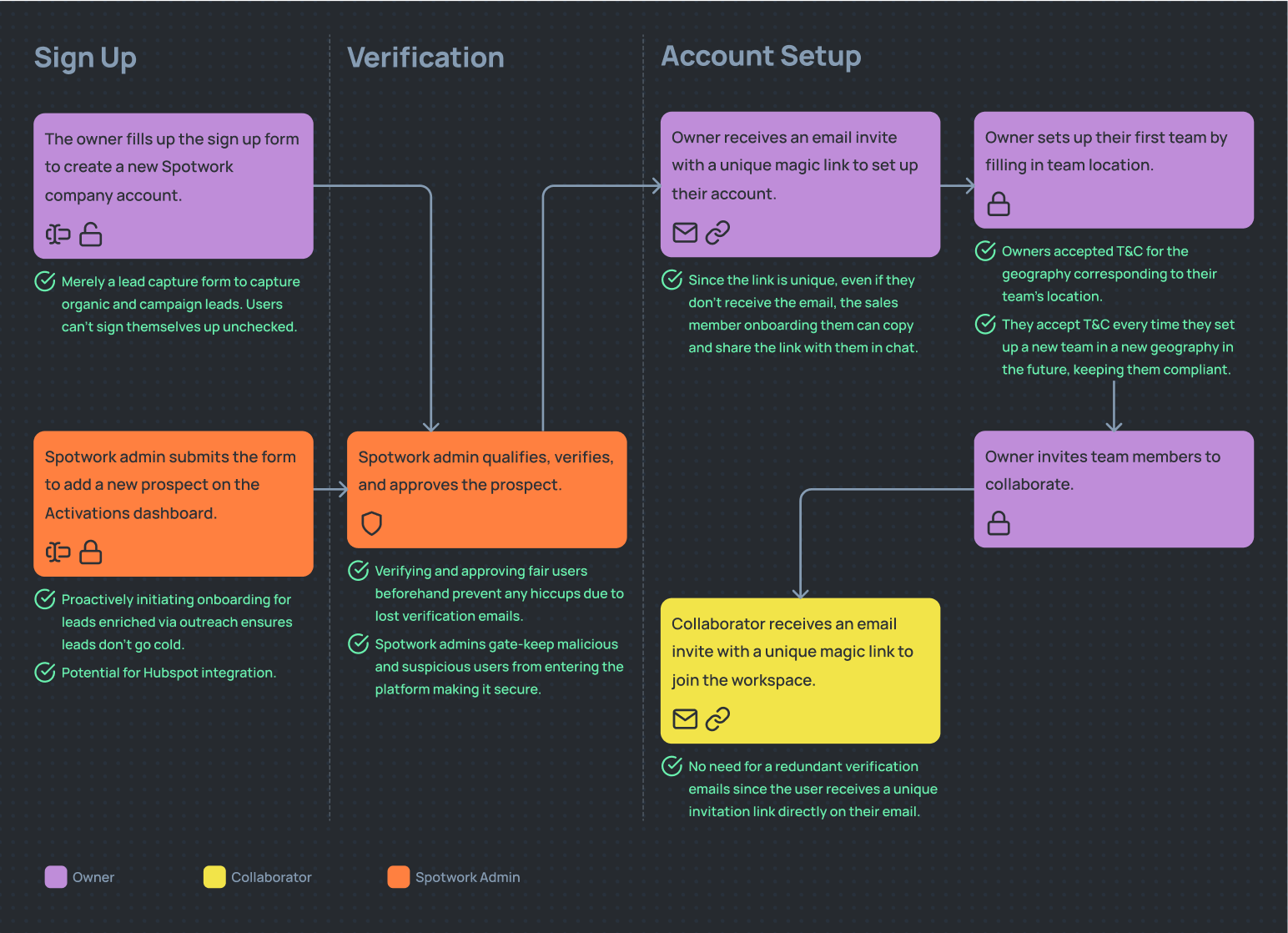
Allowing platform admins (primarily sales leads) to moderate access to the platform ensures a human is always in the verification loop making the ecosystem more secure, and eliminates friction further down the line.
1
Secure by Design
Implement an activations dashboard to pre-verify prospects, ensuring secure and controlled access to the dashboard. This approach will also expedite onboarding for leads captured through outreach by allowing quick admin approvals.
2
Tailored User Journeys
Differentiate user journeys by clearly identifying account creators and invited collaborators, utilizing unique magic links to provide secure and customized onboarding experiences. This tailored approach ensures clarity, reducing accidental account duplication.
3
Minimize Friction and Risk
Remove unnecessary email verification steps by relying on admin pre-verification, significantly streamlining user onboarding. Additionally, afford controls to manually distribute magic link as a fail-safe, minimizing risk when users fail to receive welcome emails.
The redesigned flow strengthened platform security, accelerated lead conversion, and laid a scalable foundation for growth in the U.S. market.

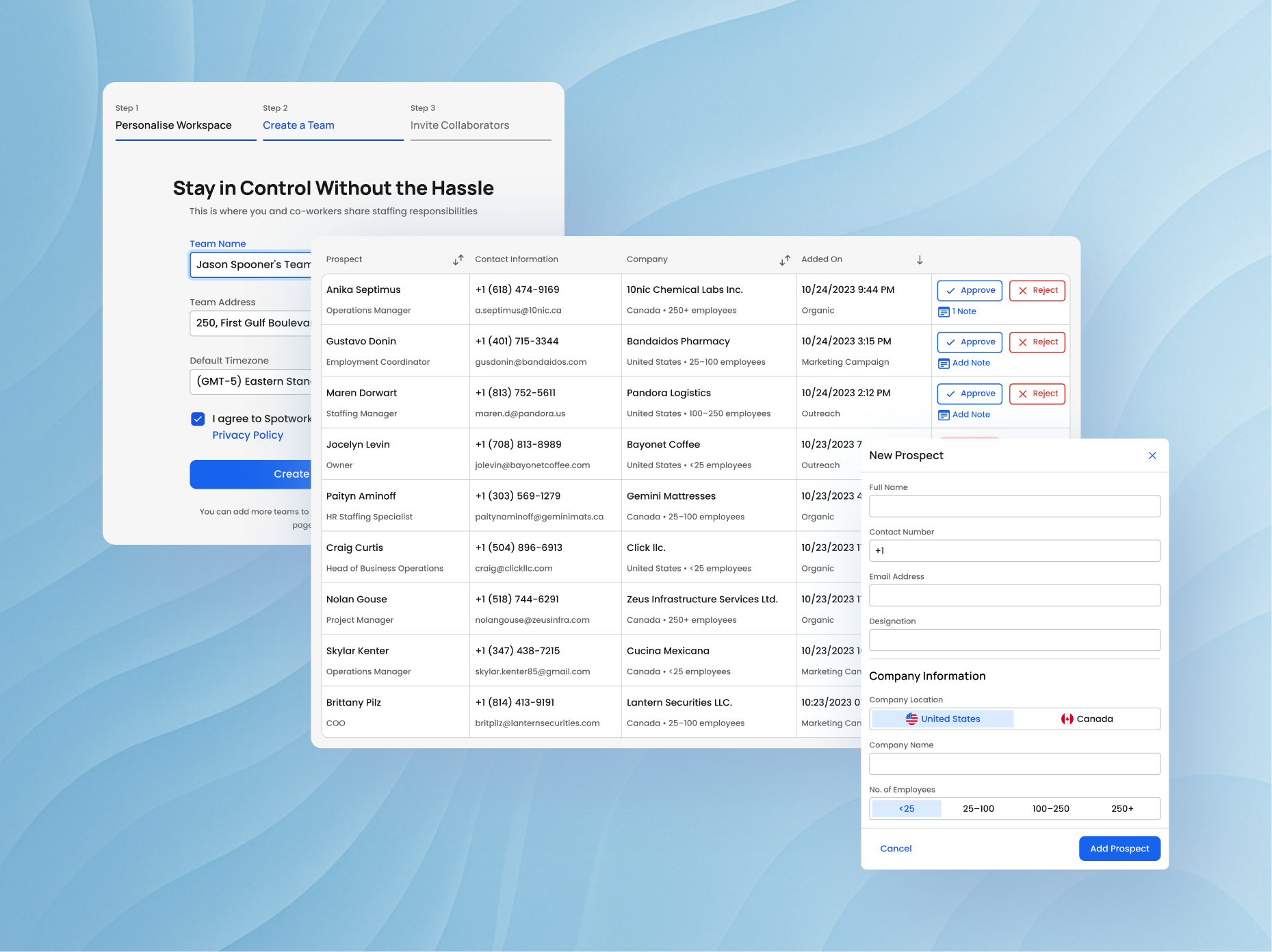
The activations dashboard captures and categorizes new company sign-up requests from various sources (organic, campaign, outreach, etc.). Admins approve or reject leads based on their knowledge of the prospect.
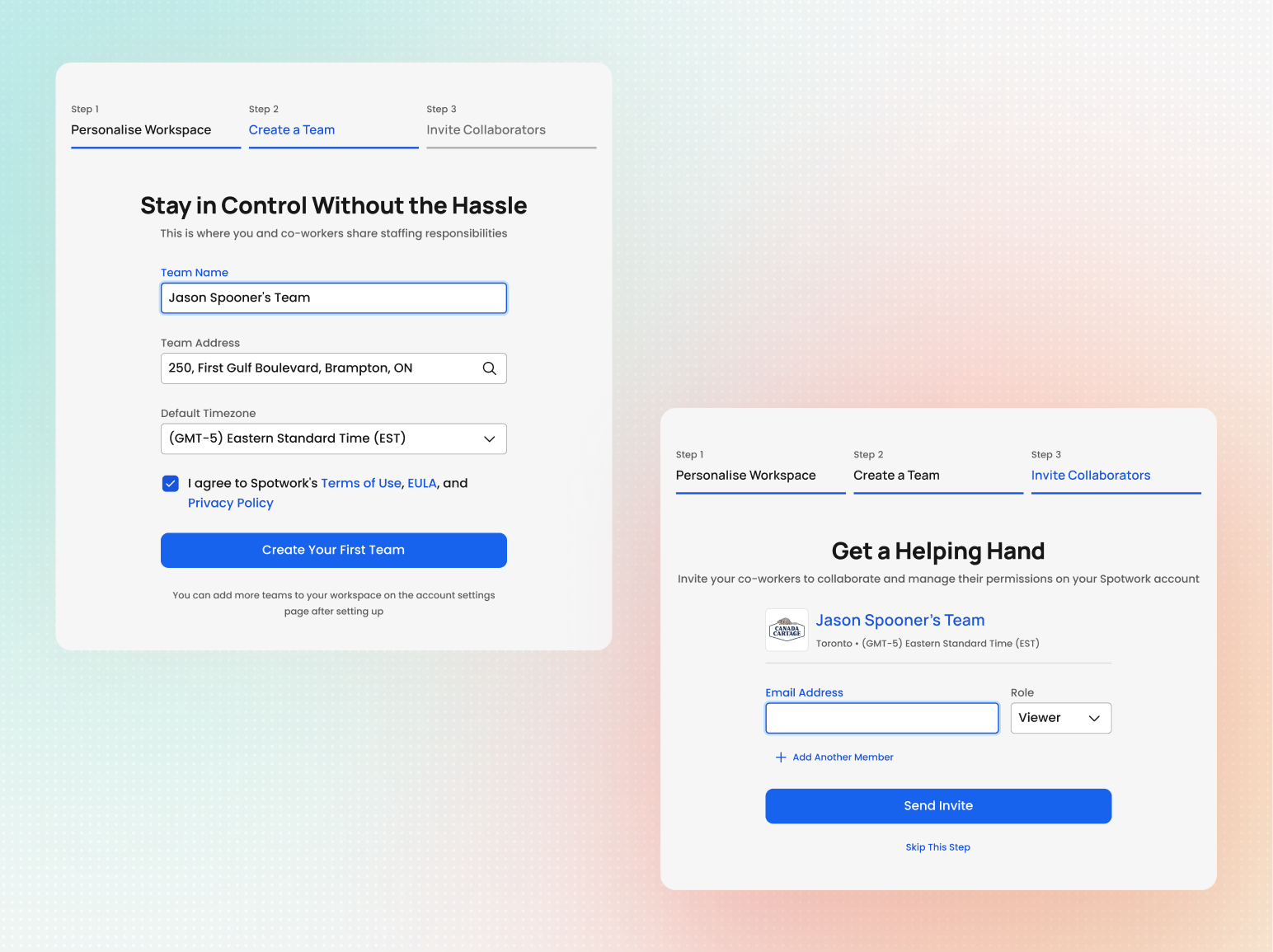
A simple 3-step account setup ensures speedy onboarding extensively minimizing time-to-first-action. Team location-based terms and conditions ensure that users are always in compliance with policy.
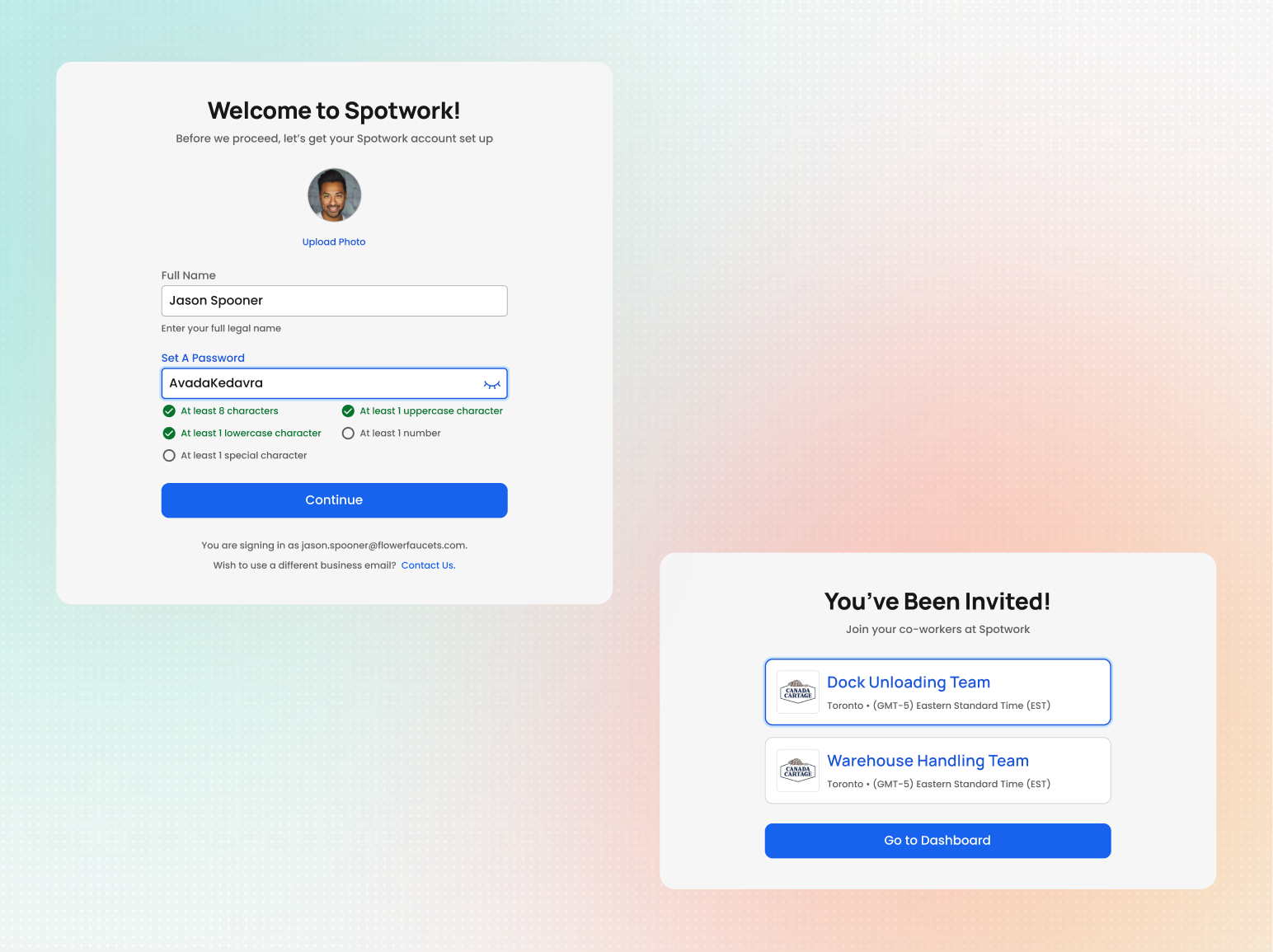
Sign-up process for invited collaborators is as simple as setting up their password and accepting invitations. Unique magic links ensure that only legitimate invitees join the team.
1
50% Faster From Lead Qualification to Dashboard Access
Enabling pre-approved access and bypassing email verification issues increased lead conversion and onboarding speed. We also noticed 11% (78% -> 89%) higher activation rate for qualified outreach leads.
2
Zero Duplicate Company Accounts
Differentiating owner and team member flows through magic links streamlined onboarding and prevented duplicate company accounts creation, eliminating data fragmentation and manual cleanup.
3
Zero Unverified New Accounts
100% of new accounts tied to verified company leads. Gating registration behind admin approval and eliminating open sign-ups enhanced platform security and data control.
4
35% Fewer Abandoned Sign-Ups
A smoother and more secure onboarding process, combined with oversight of sales leads to prevent any unwelcome entities on the platform led to a cumulative drop of 35% (40% -> <5%) in abandoned sign-ups.